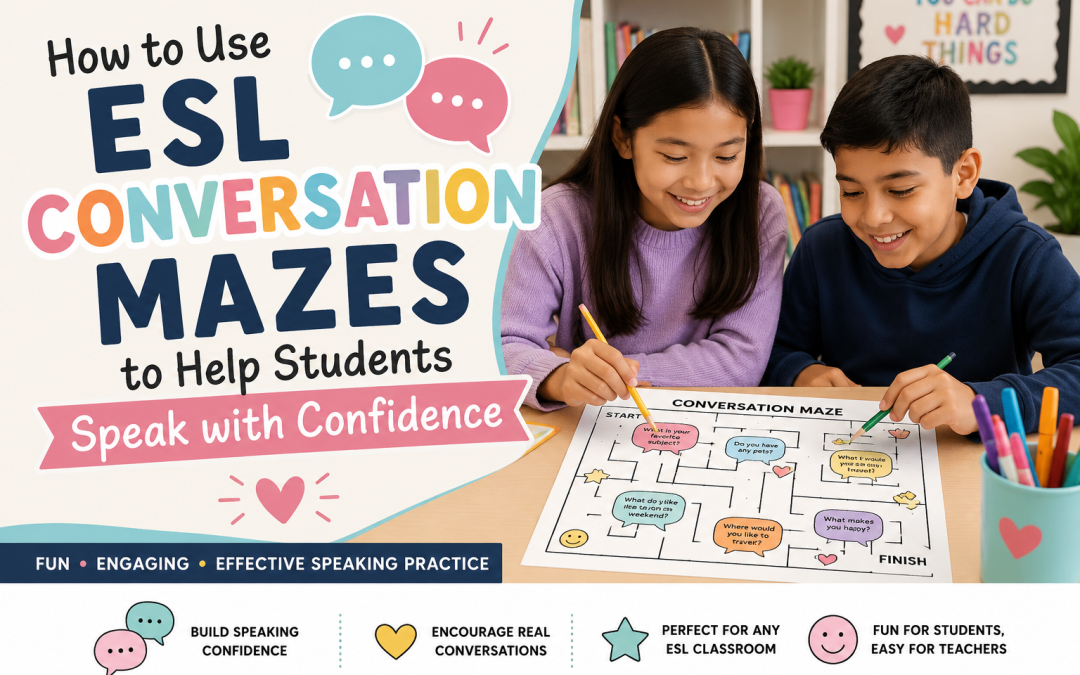
by admin | Jun 17, 2026 | ESL Speaking Activities, Teaching Practice
If you’ve ever asked your English learners to “turn and talk” only to be met with silence, one-word answers, or nervous smiles, you’re not alone.
Many multilingual learners know more English than they feel confident using. The challenge isn’t always vocabulary or grammar, but often having a structured and supportive opportunity to practice speaking.
That’s why conversation mazes have become one of my favorite speaking activities for the ESL classroom.
Conversation mazes transform traditional speaking practice into an engaging, game-like experience that encourages every student to participate. As students move through the maze, they follow a path of carefully designed questions and prompts that guide meaningful conversations with their classmates.
Instead of struggling to think of what to say next, students receive built-in language support that helps them stay engaged in the conversation. This structured approach reduces speaking anxiety, increases participation, and helps learners build confidence one conversation at a time.
WHAT IS A CONVERSATION MAZE?
A conversation maze is an interactive speaking activity where students move through a maze by asking and answering questions as they arrive to each room.
As students travel through the maze, they stop at different conversation prompts and practice speaking with a partner. Each speech bubble or checkpoint contains a question designed to encourage oral language development.
Questions may focus on:
- Personal experiences
- Opinions
- Favorites
- Descriptions
- Future plans
- Classroom topics
- Seasonal themes
The goal isn’t to find the fastest route. The goal is to create multiple opportunities for students to speak, listen, and interact using English.
HOW TO USE IT
Step 1: Introduce the Conversation Questions
Before beginning, review the conversation prompts and any new vocabulary with students.
For beginner learners, model answers and discuss unfamiliar vocabulary.
Step 2: Pair Students
Assign students a speaking partner.
Encourage students to take turns asking and answering each question they encounter.
Step 3: Follow the Maze Path
Students trace their way through the maze.
Each time they reach a speech bubble, they stop and discuss the question before continuing.
Step 4: Encourage Complete Sentences
Provide sentence stems when needed.
Examples:
- My favorite ______ is ______.
- I like ______ because ______.
- This summer I want to ______.
Step 5: Reflect and Share
After completing the maze, invite students to share something they learned about their partner.
This adds an additional layer of listening and speaking practice.
If you’re curious about what a conversation maze looks like – check it out 👇
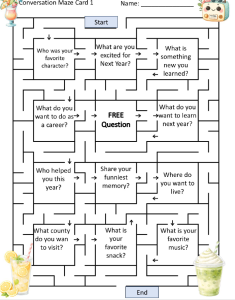
WHY IT WORKS
Conversation mazes combine several research-based language supports into one simple activity. Students always know what to talk about next, reducing anxiety and hesitation. Students practice speaking multiple times throughout the activity instead of answering only one question. It helps to create a low stress environment for speaking in a small group. It encourages authentic communication between peers, and it feels more like a game rather than a traditional speaking assignment.
BENEFITS
Conversation mazes help students:
✓ Build speaking confidence
✓ Practice listening skills
✓ Develop conversational language
✓ Strengthen peer relationships
✓ Increase classroom participation
✓ Use academic and social language
✓ Improve fluency through repetition
✓ Stay engaged through movement and interaction
✓ Practice complete sentence responses
✓ Reduce speaking anxiety
WHEN TO USE IT
Conversation mazes work well throughout the school year.
Try using them during:
- Back-to-school activities
- Morning meetings
- Speaking centers
- Small-group instruction
- Fast finisher activities
- End-of-year celebrations
- Holiday-themed lessons
- Community-building activities
- ESL pull-out groups
- Summer school programs
They are especially effective when students need structured opportunities to practice oral language.
TIPS FOR SUCCESS
Differentiate Question Levels
I always include a mix of simple and open-ended questions to support learners at different proficiency levels. I try to avoid yes – no questions as best as I can. This way students can practice using target vocabulary they have learned during the lesson.
Provide Sentence Stems
I offer simple language supports such as sentence stems to help the student with starting their conversations. However, I am careful to also not provide all sentence stems or language frames needed for the activity. I want to make sure the students are able to use “their own English” during the lesson.
Other Tips for Getting Started
Demonstrate a sample conversation before students begin.
Challenge students to ask one additional question after answering.
Focus on participation and effort rather than perfect grammar.
The goal is confidence and communication.
COMMON MISTAKES TO AVOID
Asking Questions That Are Too Difficult
Questions should match students’ language proficiency levels. Pre-teaching important vocabulary helps students participate more successfully. Give students enough time to actually talk. The conversations are more important than finishing the maze. We all know the difficulty of uncomfortable silence in the classroom, but remember, that doesn’t mean students are not thinking or processing the language.
FINAL THOUGHTS
Speaking confidence develops through practice, not perfection.
Conversation mazes provide students with a structured, engaging, and low-pressure way to use English while building meaningful connections with classmates.
Whether you’re teaching newcomers or developing multilingual learners, this simple activity can transform speaking practice from something students avoid into something they genuinely enjoy.
Sometimes the best language growth happens when students are simply having a conversation.
Are you looking to try an engaging way for your Multilingual Learners to practice Speaking in a fun and engaging way?
My ESL Conversation Maze Activities are designed specifically for beginner and intermediate multilingual learners and include engaging speaking prompts, student-friendly layouts, and low-prep activities that make oral language practice fun and meaningful.
Click the Link Here to try it for your class
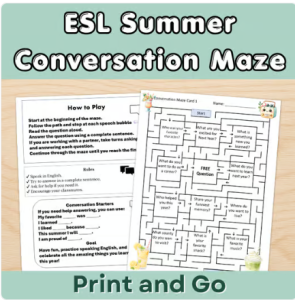
👉 ESL Conversation Maze
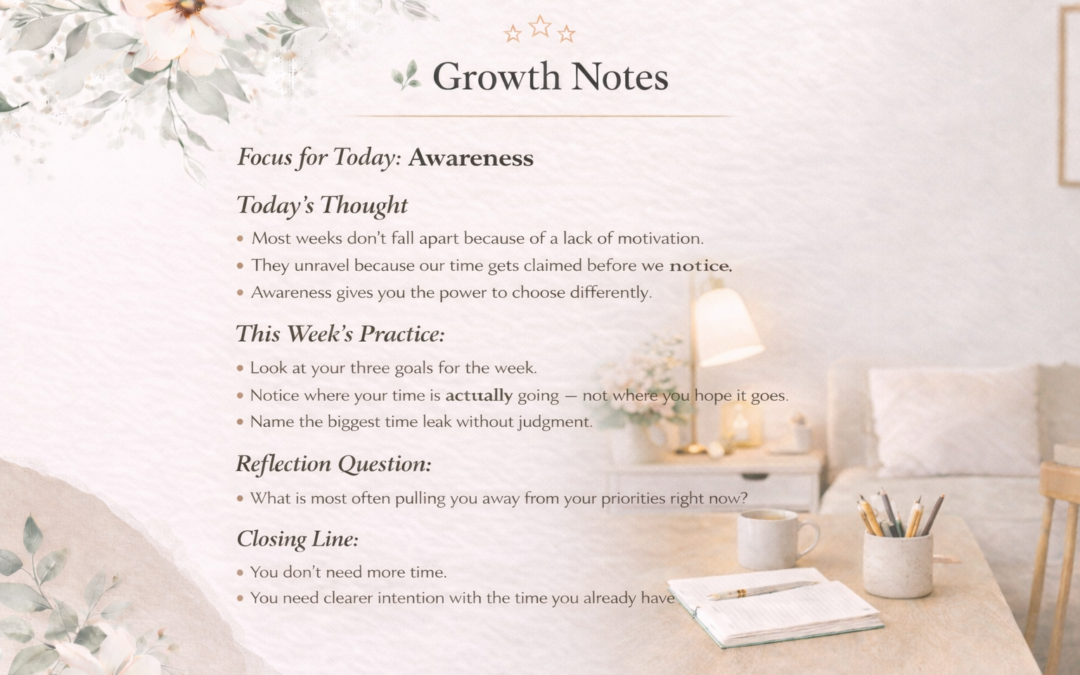
by admin | Jan 28, 2026 | Mindset and Motivation, Planning
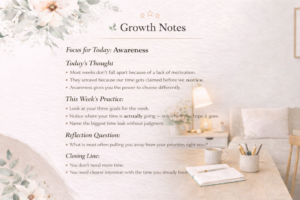
This week, I’m starting something a little different.
Instead of focusing on everything at once, we’re slowing the lens and aiming it deliberately at Specific Goals for Growth!
These goals might live in different areas of your life:
-
Growth as a teacher
-
Growth within your school or leadership role
-
Growth in a side-hustle, creative project, or business
-
Growth in how you manage your time, energy, or focus
There’s no “right” category here. The right goal is the one that keeps tugging at your heart. It is that Goal that leaves you with the What If kind of feeling.
Today’s Focus: Awareness
Before strategizing a new plan or task
Before planning HOW you are going to complete that Goal or Task
Before you Execute it
Awareness comes first.
And here’s why.
Why Goals Don’t Come to Life (It’s Not What You Think)
Most goals don’t fall apart because of a lack of motivation.
They fall apart because our time gets claimed before we notice.
The day fills up with lesson planning, our children and other responsibilities.
Urgent tasks take over.
Requests pile on from our job or admin.
And YOUR Energy gets pulled in a dozen directions.
Suddenly, the goal that mattered this morning has quietly disappeared by lunchtime.
Not because you didn’t care.
Not because you weren’t capable.
But because YOUR attention drifted without awareness.
That’s the real friction point.
Awareness Is the Gatekeeper of Progress
Awareness of your Time, Energy and Focus gives you POWER!
It helps you see:
-
Where your time actually goes (not where you think it goes)
-
When your energy is at its highest or lowest points
-
Which moments are quietly available for progress
-
Where goals tend to get pushed aside without intention
Without awareness, goals live in theory.
With awareness, goals have a fighting chance.
This Week’s Practice: Make Time Visible
Today’s work is simple — and deceptively powerful.
-
Identify your top three goals for the day.
These should be realistic, meaningful, and aligned with what you actually want to move forward.
-
Ask one critical question:
Where — and when — will this Goal happen?
Not “I’ll get to it later.”
Not “if I have time.”
But:
If time isn’t named, it usually disappears.
End-of-Day Reflection: What Did You Notice?
At the end of the day, pause and reflect:
-
Did you intentionally set aside time for at least one of your top three goals?
-
Where did your time and energy naturally flow today?
-
What pulled your attention away?
-
What surprised you?
This reflection isn’t about judgment.
It’s about data. And Information about where your time goes is a good thing to know.
Awareness turns your day into information — and information leads to better decisions you can make for tomorrow.
Your Growth Begins When you capture Awareness of your Day
You don’t need more pressure.
You don’t need a new system.
You don’t need to overhaul your life.
You need to see your time clearly. See where it goes. See who is serves.
Awareness is how growth begins.
Not someday.
Not “when things slow down.”
But Today.
by admin | Jul 20, 2025 | Planning
This summer, I’ve refined my prep routine to focus on three core areas: Clarity, Systems, and Space. Here’s what that looks like in real life:
✨ 1. Clarity First: Start With the Vision, Not the To-Do List
Before I touch a single label, desk, or planner, I give myself space to think clearly. I ask myself: What matters most this year? What do I want my students to feel when they walk into my classroom on the first day? What kind of teacher do I want to be—not just in September, but all year long?
This helps me tune into my purpose before I get swept up in tasks. I take out my journal or vision planner and write down the feeling I want this year to carry. For example, this year I’m focusing on ease, creativity, and connection. Those three words now shape every decision I make—from how I decorate the classroom to the tone I set with families. It’s not about perfection. It’s about starting with intention so I don’t burn out trying to do it all.
🔁 2. Systems Over Scrambling: Creating Flexible Foundations
Once my vision is clear, I move into setting up systems—not just checklists. I ask myself: What will support me when things get busy? Rather than planning every single detail up front, I focus on creating repeatable, flexible structures that keep me grounded.
This includes weekly time blocks for planning, routines for classroom management, behavior expectations, and simple communication templates for parent outreach. I’ve learned that these systems don’t need to be rigid—they just need to reduce decision fatigue. A good system gives me the freedom to teach and lead with heart, without feeling like I’m reinventing the wheel every week. It’s about designing my teacher life around what matters—not just what’s urgent.
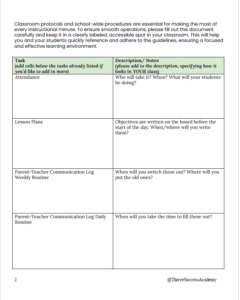
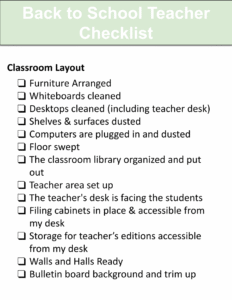
Since I have been focused on this process for about two years, and I wanted to also create a resource to support the teachers in my ESL department, I decided to turn these planning resources into a checklist, and then later into a planner.
First, the checklist is my Back to School Teacher Checklist that is a few pages long, but also helps for teachers to consider the different areas they need to consider as they plan the school year.
🌿 3. Space to Breathe: Protecting My Energy
In the past, I used to cram every minute of August with prep tasks. I’d over-commit to PD, extra duties, and projects that didn’t actually bring me joy. And guess what? I’d start the year already exhausted.
By the way – does any of this sound familiar? Focusing on so many little and BIG tasks that none of them are done with 100% Efficiency!
Now, I build in intentional white space before the day. I take time to reset my morning rhythm, protect a few sacred days without obligations, and make time to do something for myself—reading, journaling, or even just enjoying coffee in silence. These little pauses matter. They remind me that my energy isn’t unlimited—and that I don’t have to earn my worth through hustle.
One way I am doing this for this summer and as I head into the school year is by reading and journaling. A few books on my list this year are:
The Empowered Teacher Toolkit by Grace Stevens
Positive Mindset Habits for Teachers by Grace Stevens
Marketing Playbook by Lisa Jacobs
Vlog Like a Boos by Amy Landino
Reading and journaling helps me to take some time for myself to learn, and grow. It also keeps my mind focused on learning about myself and in working with others. These days reading a good book in a cozy corner with some coffee can really provide some much needed quiet in the chaos of our world!
I’ve learned that when I protect my own peace, I’m able to show up as the calm, clear leader my teacher peers, school community, students and my family deserves!❤️
📝 Want to Plan with Me?
I created a Back-to-School Prep Checklist to help teachers like you plan intentionally and breathe more easily. It walks you through each area of setup—from classroom routines to mindset prep—without the pressure.
Click here to download your FREE Back to School Prep Checklist Today: 📥 [Back to School Prep Checklist]
Use it as your anchor during these final weeks of summer. Print it, customize it, and give yourself permission to move through your own prep with grace.
💛 Final Thoughts
You deserve a school year that starts with peace, not panic.
A classroom rooted in clarity, not clutter.
A routine that supports your energy—not drains it.
This is your reminder: You are the blueprint.
Let this be the year you prepare with purpose—and lead from within.
by admin | Jul 3, 2025 | Planning

My Summer Reset Routine as a Teacher: Reflect, Reclaim, Rebuild
Summer used to feel like one long exhale, a chance where I finally have a chance to sit, sleep, and pretty much not even think about work.
But somewhere along the way, that deep breath turned into a shallow gasp.
Instead of relaxing, I found myself recovering from the long school year, and then when it came back to going back into the classroom – I started to feel that same nagging stress.
Instead of restoring, I was just… shutting down.
This year, I decided to do things differently.
This year, I chose to reset and really work towards a system of healing❤️
And I want to walk you through what that looks like—not just as a teacher, but as a woman, creator, and human being reclaiming her rhythm.
Why Rest Isn’t Enough
For years, I thought resting over the summer would be enough to refuel me. I’d sleep in, cancel plans, and binge-watch shows – which I was doing the minute I ended the school year.
Gut when August came around, I still felt drained and tired. I felt like I was going through the motions, and couldn’t really get that same energy I had. I remember that I used to feel excited to start the year, but recently I just felt blah,
What I was missing wasn’t more rest.
What I needed was a reset—a chance to clear my head, reconnect with myself, and set the tone for who I want to be next school year and really who I want to be for the rest of my life!
The 3-Phase Summer Reset I Now Live By
This summer, I’ve leaned into a three-phase reset:
Reflect, Reclaim, Rebuild.
🪞 Reflect:
I ask: What worked this year? What didn’t?
What patterns am I ready to release?
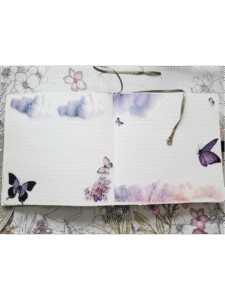
I journal almost every morning—nothing fancy, just 10 quiet minutes of truth-telling. I sometimes even find the time to do some decorative junk journaling, which helps me to relax as well.
And I take walks, alone, with no agenda but to listen to what’s rising within my spirit as I take the time to write.


🔁 Reclaim:
This is where I take back what I lost in the grind of the year. I take time to think about my plans and goals for the year, along with all of the responsibilities and extra activities I said “YES” to. As a teacher – I am 100% sure you know the story. As I reflect upon these ideas, I take time to reclaim what worked well – and remove what did not work well for me this year. Below is my process and how I get that done👇
That means:
-
Waking up slow (without guilt)
-
Drinking coffee while the house is quiet
-
Saying yes to what fills me up—and no to what doesn’t
-
Rediscovering the joy of creativity and stillness
- Making decision that are necessary to my overall physical and mental health! I choose what worked well, and what did not.
Most importantly – I never have regrets or allow bitterness to take a hold of me. I view every experience as an opportunity that I learned a valuable lesson from. In this case, some lessons are the simple task of say NO and not allowing the feeling of guilt to take over.
🌱 Rebuild:
Once I’ve cleared the mental and emotional clutter, I ask:
What do I want to create?
Who do I want to become this year?
How do I want to show up for myself, my family, my friends and my students.
This part is sacred. I light a candle, open my Dream Life Vision Journal, and map out routines that make space for joy, not just productivity. I review my Dream Life Book and review my goals and passions for the year – not just the school year – but I look at all of my yearly goals and actions as a way to remind myself of the joy I have and the possibilities for my future.
Want to See It In Action?
🎥 In my latest vlog, I take you inside my real-life routine:
“What I Do During My Summer Reset: My Real Routine and Why It Matters”
Click the Link Below to check it out👇
https://www.youtube.com/watch?v=n_7UxcyXH_8&t=1s
This isn’t a perfect aesthetic highlight reel—it’s a peek behind the scenes of how I actually live this reset in real time.
Free Gift for You: My Summer Self-Care Bingo
I created a fun Bingo Card that allows you to take some time this summer and support yourself, and your personal growth! Have fun and enjoy❤️
📥 [Click here to download it free]
by admin | Apr 8, 2025 | Planning
Your Teacher Toolkit for Less Stress, More Success
Planning doesn’t have to feel overwhelming. In fact, with the right tools and strategies, planning can become your secret weapon for staying ahead, reducing stress, and actually enjoying the process of teaching.
Whether you’re a new teacher trying to find your rhythm or a veteran educator aiming to streamline your routine, building a planning system that fits your style and schedule is the key to feeling more in control of your time and energy.
Below, I’m sharing the best resources I use and recommend to help you create a system that supports your success—without burning out. These are tried-and-true tools that simplify tasks, enhance productivity, and bring clarity to even the busiest teacher’s day.
📝 1. A Planner That Works for You
Your planner is your command center, so finding the right one is essential. I have personally found that Digital and Paper planners have pros and cons. It all depends upon your preference!
📅 Digital Planners
- Google Calendar: Great for scheduling lessons, meetings, and reminders. Color-code your blocks for easy visual reference (think: pink for personal, green for prep, blue for meetings).
- Outlook Calendar: Ideal if your school uses Microsoft tools. Syncs easily with Teams and email.
- Planbook.com: A digital lesson planner specifically built for teachers with standards integration, weekly views, and customizable templates.
📖 Paper Planners
- Use a traditional planner if you enjoy writing things down. Look for features like:
- Weekly and monthly layouts
- Space for reflection or gratitude
- To-do lists and goal sections
- Some favorites among teachers include Erin Condren Teacher Planner, Happy Planner, or Panda Planner for Educators.
💡 Pro Tip: Combine both digital and paper to get the best of both worlds!
✅ 2. Task Management Apps
When sticky notes and mental checklists just don’t cut it, task apps can keep you focused and on track.
📌 Trello
Create boards for different areas:
- Classroom tasks
- Personal projects
- Department responsibilities
Use drag-and-drop cards to move items from “To Do” → “In Progress” → “Done.”
📌 Asana
Great for team collaboration and long-term planning. Ideal if you’re managing:
- Grade-level team projects
- PD sessions
- Curriculum alignment work
Other ideas:
- Todoist – Simple and intuitive for task tracking.
- ClickUp – A robust all-in-one productivity app with calendars, task lists, docs, and more.
📚 3. Lesson Planning Resources
Lesson planning doesn’t have to be time-consuming—especially when you use the right tools to work smarter, not harder.
🖥 Templates
- Create reusable templates for weekly plans, guided reading groups, centers, or intervention lessons.
- Save templates in Google Docs or use Canva to design editable PDF versions.
🌍 Online Resources
- Teachers Pay Teachers (TPT) – Find pre-made units, printables, and hands-on resources.
- Edutopia – Get inspiration and research-backed strategies.
- CommonLit, Newsela, ReadWorks – Excellent for finding leveled texts with comprehension questions.
- Khan Academy, Mystery Science, Nearpod – Interactive content aligned with standards.
💡 Pro Tip: Save your favorite resources in a Google Drive folder labeled by subject or standard for quick access!
✍ 4. Note-Taking Apps
Your ideas, feedback, and inspiration deserve a centralized space where you can access them later.
📝 Evernote
Capture quick thoughts, photos, or voice memos on the go. Great for reflecting during a PD or jotting ideas between classes.
🗂 OneNote
Perfect for organizing lesson ideas, teacher goals, or department meeting notes in separate digital notebooks. You can even share with colleagues.
Other options:
- Notion – Great for visual thinkers and people who like to combine note-taking, checklists, and databases.
- Apple Notes or Google Keep – Simple and efficient for day-to-day use.
⏳ 5. Time-Blocking & Productivity Tools
When your schedule feels like it’s running you instead of the other way around, time-blocking brings structure back to your day.
📊 Google Calendar – Which happens to be my favorite time blocking tool!
Use color-coded blocks to:
- Prep lessons
- Grade assignments
- Schedule meetings
- Fit in self-care
Most importantly, you can set alerts to keep yourself on track and use recurring blocks for weekly tasks.
⏱ Clockify
Track how long you’re spending on grading, planning, or meetings. This can help you better allocate your time and recognize where energy is being drained.
Other productivity boosters:
- Pomodoro Timers (like Focus Keeper) – Work in 25-minute sprints with 5-minute breaks.
- Forest App – Stay focused by growing a digital tree when you stay off your phone.
🌟 6. Self-Care & Reflection Tools
You can’t pour from an empty cup. These tools help you stay grounded and intentional beyond your classroom:
📓 Journals – My go-to journal is a simple journal from Archer and Olive, but you can simply use any type of notebook for this.
- Keep a daily gratitude journal to note what went well—even if it’s something small.
- Use a reflection notebook to jot down wins, challenges, and goals.
🧘 Mindfulness Apps
- Calm or Headspace – Use guided meditations for morning mindset or nighttime wind-down.
- Insight Timer – Free meditations, affirmations, and calming music.
- Special Note: Youtube has numerous mindful apps / music channels to support with Mindfulness,
🧡 Reminder: Your well-being is just as important as your to-do list.
💡 Bonus Tools for Teachers
Here are a few more favorites I keep in my teacher toolbox:
- Canva – Create editable checklists, planning templates, parent newsletters, and vision boards.
- Google Forms – Use for tracking student reflections, behavior logs, or even teacher goal check-ins.
- Flip or Padlet – Engage students with quick reflections, while keeping your planning digital and interactive.
- Powerpoint – Use this tool for creating slides, interactive activities and resources that support student learning.
🎯 Conclusion: Plan for Success Without Overwhelm
Planning shouldn’t feel like a burden—it should feel like freedom. With the right tools, you can:
✅ Reduce stress and avoid burnout
✅ Stay focused and prioritize what matters
✅ Walk into each week with clarity and confidence
Remember: Planning isn’t about being perfect—it’s about being prepared. You don’t need to use every tool all at once. Just pick one or two that resonate with you and start building your system today.
🔥 Your Turn: Plan Like a Pro!
💡 Ready to upgrade your planning system? Start by implementing just ONE routine or tool from this post. Small shifts lead to big results.
📥 Get my FREE Weekly Planning Template to kickstart your organized teacher life!
👉 [Planning and Organization Planning sheets]
💬 What tools do you already love—or what do you struggle with most when it comes to planning? Drop a comment below or for tips, support, and inspiration! 🤝
🚀 Let’s build strong routines together and make teaching more intentional, organized, and fulfilling!
 Skip to content